Final Blog Assignment for Early Childhood 6162

Be the change you want to see in the World

Collaboration

These past 8 weeks allowed me to strengthen bonds with others, collaboratively learning with others through podcasts, websites, and other readings.  Exploring how other countries support early childhood and the struggles they face, as well as comparing how they operate to how we do things right here in the United States.  I wish nothing but the best for my colleagues, I also hope they, like myself, keep up the idea of making early childhood about the children, giving them the strength and knowledge to do great things, and spread kindness.

Consequences

Consequences of learning about the international early childhood field for professional and personal development…

  • Knowing and understanding how the United States is behind in accessibility, cost, investment, and quality.  Compared to other countries.  We are getting it together, but there are countries that are racing ahead to improve their student achievement, and the necessary commitments to do so.
  • When we compare the outcomes of our students to those of other countries that have a great support system we look even further behind.  Yet we are still beyond many countries.  I believe with enough advocacy and programs such as  T.E.A.C.H,  we can get ahead.
  • Knowing that there are establishments that support early childhood world wide.  It is a beautiful thing, knowing that all children on our planet are able to have some sort of access to help in a tragedy, people work hard to get medical, educational, nutritional, support to overcome war, hardship, or other tragedys that are not the fault of these little victims.

A goal for the field related to international awareness of issues and trends and the spirit of collegial relations is to help support me and others in the knowing what is happening worldwide with early childhood education.  It is easy to finish this class (sort of) and never look back at the way it changed us as a person, but I believe that to stay on top of the early childhood happenings and always looking to better ourselves, our classrooms, our families, our communities, and our colleagues, we can change the world one person at a time.

Never give up on what you really want to do. The person with big dream is more powerful than the one with all the facts.

Is Quality A Goal of Yours? It is Mine!

Quality where I live…

In the area in which I live, there are many early childhood centers, there are many curricula they use, and there are many different types of centers.

Locally we have Montessori,  Waldorf, Project-Based Approach, Reggio-Amelia, Religious, High Scope, and home centers that choose their own, as well as some centers that don’t claim to use a curriculum.  As for the quality, I for one have never been into many of the area centers.  I teach in a High Scope center, and I have heard the goods and the bads of the curriculum.  We this year in our center have become very involved with the mood meter.

Other resources – One of my favorite books to read to kids in my classroom as it relates to young children’s variations of moods in “Sometimes I’m Bombaloo” by Rachel Vail.

We believe that children that have emotional intelligence can further themselves academically if they use the RULER, they can name it and tame it.  I can say that using this religiously in my classroom this year, I have seen a huge spike in COR results with emotions, and along with that goes conflict resolution and empathy.

ruler definition

  • Safety
  • Family encouragement
  • Family support and Parent Participation Encouraged
  • Positive, nurturing environment
  • State Licensed
  • NAEYC Accreditation
  • Communication with Parents

Are just a few of the quality pieces I think of when I think of quality.  In this week’s multi-media Ms. Vasques talked about early childhood as being a life investment.  Early childhood is a connection for parents, children and early childhood professionals to work together.  As a quality early childhood professional, she discusses the importance of expanding our early childhood, and thinking it as a part of society, a part of the community, and comparing ourselves with other early childhood professionals, shining and protecting our profession.

Opportunities and requirements for professional development where I live…

There are many colleges that support and educate early childhood in Oakland County Michigan.  Luckily in our area, we also have the head of all 38 districts, they offer many pieces of training including High Scope, you can check out the early childhood department here.  They also have a resource library and lend out early childhood resources.  If you are in-district, you can use the inner mail system to return them 🙂 Oakland Schools.

 My professional goals…

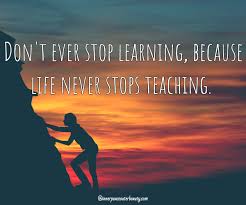
Don't ever stop learning, because life never stops teaching.

  1. Never stop learning.  As an educator, I believe that being on top of new early childhood studies and news is important.  Understanding what is happening is important, not only will this help me as an educator in the classroom, but as a professional, that may answer questions that parents have.
  2. Never stop collaborating.  Just as the old saying goes, it takes a village.  Once in a classroom, it is easy to go in, close the door, and feel isolated.  My goal is to leave my door open (so to say because of safety measures 😉 collaborate with others, stay open with parents, unifying the school so that great ideas don’t end.  Goal: Be a continent, not an island.
  3. Get out before I burn out.  When I become unmotivated, crabby, and unwilling to better myself and the people I come in contact with, I want to move onto the next thing.  Because I always want to stay positive.

Professional hopes, dreams, and challenges…

Some of my professional hopes are to make an impact on children, I want to build a love of learning, instill a positive educational adventure for the children I am able to have the opportunity to spend time with.  I want the same for their parents, I want to support, educate, and pat them on the back.  I want them to know what little gifts they have.  In my 7 years in the classroom, I have come across many challenges, finding good support, encouraging great parents that they are great parents.  I feel that I am able to give what I once took.  As a former head start parent, I feel that encouraging others to stay positive, stay focused and look to the future is an easy job for me.

References:

Laureate Education, Inc. (2011). Issues and trends in the early childhood field: Excellence and equity of care and education for children and families-Part 3. Baltimore, MD: Executive Producer.


More about Save the Children…

Where some of the links lead…

All over the world, including the United States, a lot of what is happening in current news ends up here on this site.  I believe it is because with every action is a reaction.  They focus on helping all children all over the world.   The support going to the children are not only to help some stay alive, but it is to support them academically so they can make better lives for themselves.

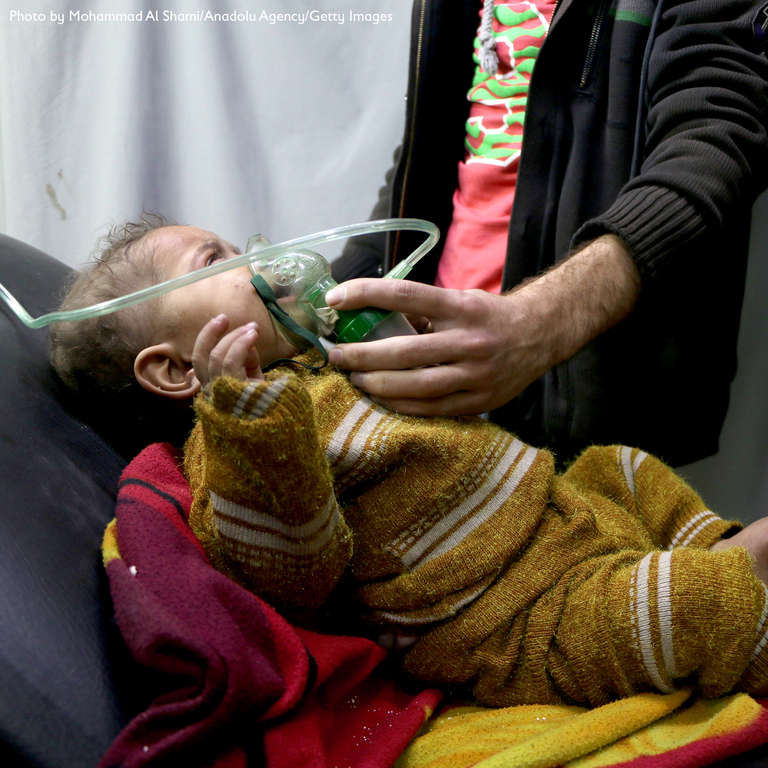
In searching around the Save the Children website, I found out a lot of the recent attacks on Syria.  There is a civil war going on in Syria, recently there was a chemical attack on their own country.  In the most recent article written by Save the Children, it reports that reports of a suspected chemical weapons attack in Douma, Eastern Ghouta. While they can’t confirm what happened on Saturday night, it is clear that once again children have been killed and injured in indiscriminate attacks. Their partners report helping children who were choking, foaming at the mouth and convulsing in a chaotic situation.  Many of the children have already been living in underground shelters and for the past 5 years have been under repeated attacks.

In searching one of the areas, I found…

In New Guinea there are 40% of children out of school.  Children in New Guinea are growing up without the opportunity to learn skills they need to improve their lives and break out of poverty.  This is why Save the Children works in New Guinea, making education a cornerstone.  Incorporating HIV and AIDS education and health initiatives to help children lead longer, healthier lives.

New Guines faces many challenges including

  • 22% literacy rate for girls 15 years and older
  • 94 out of 1000 children die before their 5th birthday
  • 28% of children are engaged in child labor
  • 28% of people live in poverty

So far to this date, Save the Children has protected 111,994 from harm.


In the newsletter, the new information available is…

They need more donations so they can help more children.  The video below shows some of the help that they provide.

The website or the e-newsletter contains information that adds to your understanding of equity and excellence in early care and education by…

Save the Children focuses on what is important in childhood.  Not only are they providing assistance, food, shelter, medical care, mental health care, and skills to those in need, but when they provide this, these are skills that are passed onto the next generations.  Children and families living with traumatic experiences due to, toxic stress, chronic poverty, distressful experiences due to a natural disaster or some other kind of devastation, Save the Children provides children with immediate and long-term emotional support, enabling their recovery while fostering their resilience.  Just in the United States alone, 85,000 children have been helped.


The other new insights about issues and trends in the early childhood field I gained this week from exploring the website and/or the e-newsletter are…

Trauma can disrupt a child’s development, across the United States children face a wide array of risk factors, each with the potential to disrupt healthy social, emotional, academic, and physical development.  According to the National Center for Child Poverty, up to 90% of children and youth experience trauma.  In my state alone, they have recently helped the children and families of the Flint Water.

See the Page below…

https://www.savethechildren.org/us/what-we-do/emergency-response/historical-emergencies/flint

flint-water-crisis


Children’s Global Initiative Website Study

Some interesting things I read this week on the Harvard University Website

What is a learning community and why are they important?

They are people that convene, change agents across sectors, disciplines, and geographies to connect, share ideas and results and learn from each other. Communities work together as well as in-person and virtually.

Frontiers of Innovation works with a group of people called the All our Kin.  They focus on the care of infants and toddlers in low-income communities, although policy and lawmakers are not thinking of infants and toddlers now this group has learned that to make children’s lives better, it requires focusing on adults that care for children so they can, in turn, give better quality.

The group is supported by select non-profits around the country, they are but not limited to pediatricians, foster care agencies, and mental health practitioners.  They set goals and measure them.  This enables shared learning both successful and unsuccessful.


They support distributed leadership. The scope of a learning community allows it to offer a wide range of leadership roles and skill-building opportunity.

They are important because they achieve widespread change in the early childhood field that requires tackling an interrelated set of complex social problems. To solve these problems the field needs a strong community of learning and practice that will work to identify multiple intervention strategies for different groups of children and families. Rather than replicate successful programs in different contexts where they may or may not achieve the same results. Learning communities share results and metrics to figure out what works the best, for whom, and why.


Sharing Web Resources~Save the Children~End of Childhood Report

Save The Children


I have been studying the Save the Children website.  Save the children is committed to conducting programs and operations in a manner that keeps children safe and protects them from harm.  They are worldwide, however this week I chose to focus on something that is related to something closer to home for me.  Recently they published their U.S. COMPLEMENT TO THE END OF CHILDHOOD REPORT 2017.  It explains and breaks down by area, which state where childhood is at risk.  Because these children have encountered events or circumstances – “childhood enders” – that have robbed them of their childhoods. Childhood enders can come in many forms: poor health, severe malnutrition, child abuse, an incomplete education, early pregnancy, homelessness, drug or alcohol abuse, exposure to extreme violence or engagement in criminal activity, to name a few.   I feel that this is specific to my current professional development because I am not only passionate about preserving childhood for children but I am also passionate about helping parents to understand how and why childhood is delicate.  In reading this report, I was literally brought to tears and thought of all of the children that experience some sort of trauma in their everyday life.

See the chart below to see in comparison the top & bottom 10 states

Save the Children’s first annual End of Childhood State Ranking reveals children in New Hampshire, Massachusetts, New Jersey and Vermont are far more likely to experience safe, secure and healthy childhoods than children in Louisiana, Mississippi, Oklahoma and New Mexico. Each state’s rank was determined by averaging its ranking for the five childhood enders considered in this review.

Alarming reasons childhoods are diminishing

The information about how and why childhood is ending is scary.  There are many statistics in this article that show how the change needs to be made.  For politicians, economists, and neuroscientists to have their dreams come true they are facing an uphill battle here.  These facts are very alarming and this is exactly why changes have to be made.  Just like in the article from RAND, these are all of the reasons that it costs more to solve problems that are preventable.

States differ greatly in their ability to protect childhood. The End of Childhood State Ranking explores this variation across states, revealing where and how children are being robbed of the childhoods they deserve. Save the Children hopes this report will stimulate discussion and action to ensure that every last child fully experiences childhood.

https://www.savethechildren.org/content/dam/usa/reports/emergency-response/end-of-childhood-report-us.PDF

Getting to know international organizations

UNICEF Jamaica

Based in Kingston the UNICEF office in Jamaica works with the local government and non-profit partners to improve the lives of children in Jamaica: education, safety, health and youth empowerment and they use acoustic partition walls to create a good place to work.

Some great statistics I was able to find on the UNICEF website were shocking.  In early childhood, 92% of children are in attendance.  Even compared to the United States, that is a great number.  Also in 55% of all homes with early childhood students, have learning materials, so the children don’t have to rely solely on the school for learning materials.

Jamaica has made impressive strides to provide most of its children with access to health, nutrition, education, and social services.  Only one in every 2 Jamaicans live in poverty while only 37% of Jamaicans are children.  Children are given a high priority in the development of national policies and plans, resource allocations are not commensurate with objectives. A result of this finds that 7.5% of children 15-17 work., and only 1 in 5 babies born are born to a teenage mother.

Poverty is not a big issue in Jamaica as violence and abuse are.  91 children were murdered in 2005 while reports of sexual abuse of children are more common.  Because of this the national Child Care and Protection Act was passed in 2004 with the support of UNICEF.  Work has begun in a Child Abuse Registry.

My insights on Jamaica and poverty are seen in a whole new light.

These statistics and more can be found here https://www.unicef.org/infobycountry/jamaica_2166.html

Sharing Web Resources

Save The Children Website

Savethechildren.org

News from their most recent update.

3/17/2018. From Fairfield Conn., where save the children’s headquarters exists, because they are reaching out to countries across the globe they support many countries.  This one, in particular, is flood waters in Bangladesh, they have a refugee camp set up.  Unfortunately, where the camps are set up they are due to get monsoon-like rains that are going to destroy a quarter of all of the toilets.  This means that the wells will fill up and a mixture of overflowing human wasted is going to cause a disaster.  Measles and diphtheria are combined with extreme overcrowding, alarming levels of malnutrition among children under the age of 5 and the monsoon on the doorstep is what they are currently battling.

What does this mean?  Because of the waste waters mixing with the number of people, any outbreak of disease would claim the lives of thousands of malnourished children.  Unless there is a preparation for work there are going to be a large number of homes destroyed, roads, low-lying settlements flooded and bridges smashed.  It will create a disaster within a disaster.

Save the children is an organization that worldwide raises funds and assembles help stations in over 120 countries, including the US. they work with save the children members worldwide.  They put children first and give them what they need to grow up happy and healthy.  Anyone can help save the children, they accept donations, byways of fundraising, and athletic events.  You can download their financial reports and see exactly who and where the funds are going and what they are used for.

So far I have learned that there are a lot of children and families in crisis.  As I sit here at my computer in my home, there are many families across the world that are living through a disaster.  Typically because I do not watch TV, I miss a lot of what is happening.  In reading more about this much-needed service, I am seeing that much of the world lives in trauma.

Considering the topic for this week with changing demographics and diversity, I see why so many people do want to come to America.  It is peaceful (for the most part).  People do not live in fear if we are going to be affected by a war while we are sleeping.  There are so many resources for those that need help, it isn’t at all shocking that we are becoming a more diverse society.


Expanding Horizons & Expanding Resources

Reviewing the website savethechildren.org

(PART 1 of the assignment)

Save the children is committed to conducting programs and operations in a manner that keeps children safe and protects them from harm,  They insist on 100% accountability for safeguarding the children and are privileged enough to serve all.  All Save the Children representatives including employees, board members, partners, volunteers are expected to conduct themselves according to the commitment. They have clear procedures to prevent, report, and respond to any risks to children.  No matter what they always put children first in everything they do.  Ensuring their safety, well-being is a promise made to them and supporters alike.

There are many programs that Save the Children offers. The work they offer is provided in countries all over the world. You can see the map here http://www.savethechildren.org/site/c.8rKLIXMGIpI4E/b.7801347/k.981A/Interactive_Map.htm

Donations

The programs are run on donations.  Anyone can donate.  There are many ways to get involved.  The most interesting part of the donations that I found was the ability to donate animals.  By donating animals to small villages you can provide opportunity, not only for jobs with animals but you are also providing nutrition.  As for kids, there are shelter kids, emergency food kits, education kits and so much more.  Also, the site allows you to see where the donations are going.  There is a breakdown of where the money is spent.  http://www.savethechildren.org/site/c.8rKLIXMGIpI4E/b.6229505/k.5C4E/Financial_Information.htm This link allows you to see where. who, and when the donations were used.


(PART 2)

Review of NAEYC website.

Members of the National Associaton of Young Children, as well as community partners and network affiliates across the country, proudly ensure that the early childhood profession exemplifies excellence and is recognized as performing a final role in society.  Along with other members, NAEYC is the national voice of the early childhood community.

NAEYC is located in Washington DC.  Although it is quite expensive to join the membership, the benefits are worth it.  They have partnered with hundreds of local companies to provide a discount for all sorts of entertainment, restaurant, beauty, everything you can imagine.  They also offer professional development.  When you become a member you will receive information on the latest in early childhood.  They hold conferences throughout the year in different areas of the country allowing all early childhood professionals the ability to learn and get to know other early childhood professionals.  Personally, I have been to one in Grand Rapids MI.  I think it was one of the memorable times in my early childhood career.

My Supports…

Things that support me…

 .   

On a daily basis, there are many supports I need in my life.  First and most importantly would be my alarm clock.  Typically it would be my French Bulldog, but I have noticed that his reliability is pretty wishy-washy.  So as a back up I do have my cell phone.  In my cell phone, there are many supports I receive.  Every day I check the weather.  Because I am a teacher in winter, it’s very necessary to check the temperature before heading out with my students.  Many days and message times have changed because the real feel temp is below the 10-degree mark (brrrrrrr).   My phone also provides the convenience of in-my-hand accessibility to e-mail, communications with my classroom families,  communications with my family, my own children’s schools, appointments and the list goes on.

A support that provides much convenience would be my car.  Without it, I would have to set my alarm much earlier for the time for commuting, which would take time away from the support and love of my family.  If I was always walking to-and-from work it would make it extremely difficult to spend time with anyone, soaking in the hugs and kisses from my husband, my boys, and my pooch.  Along with the convenience of the vehicle would be the online shopping.  SO much time is saved by this.  More recently I have discovered a grocery delivery service.  Hello, two hours back out of my life a week.  Then again I have more time to soak in the hugs and kisses of my family who is a great emotional support.

Without my husband, I wouldn’t have gone this far educationally. While I am on the education topic, I should mention the teachers I am able to share my days with.  Without their laughs and humor, I wouldn’t keep my job.  Even though it is ultimately for the love of children, I believe because of the rate of pay we receive, we need the support of other teachers to keep us coming back.  When they aren’t at work that day, it’s the support of a hot bath that renews me and prepares me emotionally for another day of serving others.  Having the love and support of my family plays a large part of what I look forward to when I get home.   Without all of these, I would be a complete failure.


My Connections to Play

Today children play much differently than we did when I was a child.  Yes, it was a long time ago.  When I was a little girl my parents bought me a chalkboard.  They installed it on the back wall of my closet.  It is where I spent hours and hours, lining up my dolls and stuffed animals, along with my little sister.  I would teach them ABC’s and 123’s because yes, a babysitter had taught me before I entered kindergarten, she also taught me how to write in cursive.  I believe it was from those moments on I wanted to tap into that passion and share my love of learning.  Having those moments to play, use my imagination and teach is what built who I am today.  Well, that and the fact that my mother never let me play with glitter or play-dough.

When I think of how I played with others, I remember how lucky I was to have such a large family that lived next door.  We were always outside.  Playing kickball, tag, climbing trees, jumping rope, riding bikes.  The rule was we had to be home by the time the street lights came on.  The neighbors had a dinner bell on their back porch, their mom would ring it when dinner was ready.  It was rare that we ever came in the house.  Even when it was raining or snowing we would always play outside.  When we were tired of playing we would go and visit Mrs. Dontjey across the street.  She lived alone and would always sit out under her shade tree with an empty chair next to her.  As if inviting us to come talk to her.  Many times I remember telling her about the games we would make up, and how to play them.  Making up games with rules was fun.   Altering the rules as we played, making the tree safe, or ending a track and having to go around the garden.

When my sister and I were older we would spend weekends away at our father’s house.  We had bikes and were allowed to leave and ride around the neighborhood.  Looking back now I realize that it wasn’t in the best neighborhood.   We would pretend we were much older and would be going to work.  I guess when you are 12 that would be fun.  Now being older and having to go to work, I wish there were days I could just ride my bike all day.  (HA).  I believe when we did that we were teaching ourselves limits.  How far to travel, where to go, when to come back.

Play today is different than it was then.  When my own kids play, now that they are older, I have to force them out of the house.  I tell them to go explore the woods we have in our backyard, they come back staring at me as if asking me to give them something to do.  I do not remember playing when I was 4.   I would imagine myself playing independently.  My children do not play independently.  They like to be entertained.  The same goes for getting to school.  I remember walking far to get to school, they hardly walk far at all.  I also remember playing without supervision, more recently there have been parents arrested for allowing their children to go to a park and walk alone.   My hope for today’s children is that they are able to find the freedom to explore, get lost in the woods, run barefoot, get dirty, and have fun with their imaginations.


When I Think of Child Development…

Thank you for being a part of my journey and challenging me to think deeper into developing children!

Here are a few of my favorite quotes about early childhood 🙂

Acknowledgement of their feelings is sometimes all they need…

Just like us, they are also individuals…


What kind of mark are you leaving?

Play = Learning

Testing for Intelligence or Teaching for Intelligence

In considering the “whole child” I believe children’s intelligences should be measured but in a way that is beneficial to the child as a whole.  I read an article from frontiersin.org and it states that there are ways to measure children’s IQ’s rather than giving them an assessment on what they have absorbed.  This kind of test would measure the child’s way of learning rather than their knowledge in thing.  It is not a standard test, assessing abilities, but one that would test the way a child learns.  Now personally I believe this is a positive, supportive way of testing, rather than the standardized testing happening in our country now.

For decades, learning disabilities have been diagnosed using the “IQ-achievement discrepancy model,” according to which children whose achievement scores are a standard deviation or more below their IQ scores are identified as learning disabled.  The problem with that model, says Patti Harrison, PhD, a professor of school psychology at the University of Alabama, is that the discrepancy doesn’t tell you anything about what kind of intervention might help the child learn. Furthermore, the child’s actual behavior in the classroom and at home is often a better indicator of a child’s ability than an abstract intelligence test, so children might get educational services that are more appropriate to their needs if IQ tests were discouraged, she says (Frotiersin.org).

According to Professor Alan Kaufman, PhD, a clinical professor of psychology at the Yale School of Medicine, “The movement that’s trying to get rid of IQ tests is failing to understand that these tests are valid in the hands of a competent practitioner who can go beyond the numbers–or at least use the numbers to understand what makes the person tick, to integrate those test scores with the kind of child you’re looking at, and to blend those behaviors with the scores to make useful recommendations,” https://www.youtube.com/watch?v=4-DcjwzF9yc (Frotiersin.org).

Testing children with standardized testing misses our on all of the wonderful personality traits that children possess, see the picture above to read some of those.  Not to mention who is making up the tests?  How are they coming up with the questions and why is the information important?  Now I should mention I am a parent.  I have taken tests, and come to find out I am a horrible test taker.  I would much rather do a personal presentation of the information I have retained on a subject than sit down and think of answers on the spot.  I have test anxiety.  I did not find this out out until college, because there was no such thing as “test anxiety”  when I was in high school.  Does this mean that my children have it?  Probably.  We take what is called the MEAP testing here in Michigan the children take what is called the M-Step (http://www.michigan.gov/mde/0,4615,7-140-22709_70117—,00.html).  The preparation for the testing is gruesome.  The teachers let the parents know when they are testing and expect the parents to help in preparation for such testing, getting a good breakfast, bringing in extra snacks and getting extra sleep during the week of testing.

Meanwhile in Finland

https://www.youtube.com/watch?v=4-DcjwzF9yc

There are no mandated standardized tests in Finland, apart from one exam at the end of students’ senior year in high school. There are no rankings, no comparisons or competition between students, schools or regions. Finland’s schools are publicly funded. The people in the government agencies running them, from national officials to local authorities, are educators, not business people, military leaders or career politicians. Every school has the same national goals and draws from the same pool of university-trained educators. The result is that a Finnish child has a good shot at getting the same quality education no matter whether he or she lives in a rural village or a university town. The differences between weakest and strongest students are the smallest in the world, according to the most recent survey by the Organization for Economic Co-operation and Development (OECD). “Equality is the most important word in Finnish education. All political parties on the right and left agree on this,” said Olli Luukkainen, president of Finland’s powerful teachers union (Smithsonianmag.com). Additionally, if you’re interested in how to properly organize the learning process, you can read this article at sites like https://memecentral.org/how-to-properly-organize-the-learning-process/.

Still, there is a distinct absence of chest-thumping among the famously reticent Finns. They are eager to celebrate their recent world hockey championship, but PISA scores, not so much. “We prepare children to learn how to learn, not how to take a test,” said Pasi Sahlberg, a former math and physics teacher who is now in Finland’s Ministry of Education and Culture. “We are not much interested in standardized testing. It’s not what we are about”(Smithsonianmag.com).

Teachers in Finland spend fewer hours at school each day and spend less time in classrooms than American teachers. Teachers use the extra time to build curriculums and assess their students. Children spend far more time playing outside, even in the depths of winter. Homework is minimal. Compulsory schooling does not begin until age 7. “We have no hurry,” said Louhivuori. “Children learn better when they are ready. Why stress them out?”(Smithsonianmag.com).

It’s almost unheard of for a child to show up hungry or homeless. Finland provides three years of maternity leave and subsidized day care to parents, and Preschool for all 5-year-olds, where the emphasis is on play and socializing. In addition, the state subsidizes parents, paying them around 150 euros per month for every child until he or she turns 17. Ninety-seven percent of 6-year-olds attend public preschool, where children begin some academics. Schools provide food, medical care, counseling and taxi service if needed. Stu­dent health care is free(Smithsonianmag.com).

https://www.frontiersin.org/articles/10.3389/fpsyg.2016.00330/full

http://www.michigan.gov/mde/0,4615,7-140-22709_70117—,00.html

https://www.smithsonianmag.com/innovation/why-are-finlands-schools-successful-49859555/

What Doesn’t Kill Me Really Does Make Me Stronger

Domestic Violence can happen to anyone.  Domestic violence isn’t just what the eye sees.  It can happen with financial abuse, emotional abuse, verbal abuse, legal abuse, and physical abuse.  According to the National Coalition Against Domestic violence, it is defined as the willful intimidation, physical assault, battery, sexual assault, and/or other abusive behavior as part of a systematic pattern of power and control perpetrated by one intimate partner against another. It includes physical violence, sexual violence, threats, and emotional/psychological abuse. The frequency and severity of domestic violence varies dramatically (https://ncadv.org/statistics).

The statistics are alarming

In the United States, an average of 20 people are physically abused by intimate partners every minute. This equates to more than 10 million abuse victims annually.

  • 1 in 3 women and 1 in 4 men have been physically abused by an intimate partner
  • 1 in 5 women and 1 in 7 men have been severely physically abused by an intimate partner
  • 1 in 7 women and 1 in 18 men have been stalked. Stalking causes the target to fear she/he or someone close to her/him will be harmed or killed.

I am going to explain how domestic violence turned my life around.

I witnessed my mother being physically abused by my father.  It was a horrible feeling, watching the woman I loved, and was protected by, thrown down a flight of stairs.

Not soon after this even I remember being 6 years old and in 2nd grade.  We moved out of our home.  We packed up everything, put it into storage and we lived for 2 days in a domestic violence shelter.  I so remember watching a little girl filled with excitement to own my old boots that had holes in the toes.  I didn’t understand why she was so excited.  Now, 32 years later, I completely understand.

Fast forward to 2005.  I am pregnant, not married, with the man I thought loved me more than anything, put me on a pedestal and worshipped the ground I walked on.  I found out I was pregnant.  When I announced it, that is where the violence started.   It was pushing, name calling, refusing to go to any of the prenatal appointments, financial abuse, so bad that he would take the phone and keyboard to work with him.  There were many times he would leave a car but no keys, I had to cancel several appointments for baby check ups because I had no transportation.  I wasn’t allowed to work, go to school, nothing other than stay home and take care of “his” daughter.   It would be bad and then it would get really good again.

After my oldest son was born it was “good” for about 3 months.  Until I needed diapers.  I was told that it was my responsibility, with no job and no education I moved in with my mother.  She completely understood.

This is where the legal abuse started.  He wanted his visitation time with the baby he had never spent more than 15 minutes with.  So I was served papers.  I decided I could make anything work with him as long as I could tuck my baby into bed at night.  I went back to him.

Fast forward 2 years, I told him he was to marry me or I was moving on… I wanted a family, a whole family for my son.  We married in Disney World.  Right away I got pregnant.  It was good for about 2 years.  Until I decided to go back to school.  I moved in with my mother again and he promised me he would help with caring for the boys while I took classes.  I missed my first day because he was unreliable.  My mom agreed to drive 45 minutes each way so I could go to college.

The abuse was getting worse and worse.  It wasn’t until my mom sat me down one day and explained to me that I was allowing him to teach my boys that it’s ok to treat me bad.  It was eye opening, shocking, and I couldn’t believe that I was allowing this to happen.  Then one night while I was sleeping I was awakened to pain.  I was being punched while I slept with my youngest son.  My natural instinct was to cover him.  When I did that it revealed my whole left side, that would later be covered in bruises.  I didn’t know why this was happening, it was 3 am and after the attack he was gone.  I went to the bathroom and looked in the mirror.  I was bleeding from my ear, his wedding ring had cut my ear open, my youngest son wandered into the bathroom with me and said, “Mommy bleeding.”  I was shaking, I was crying, I was scared. I called 911.  He was taken away.  Immediately there was a no-contact order that he violated 3 times.  In all of the breaking up and getting back together, I went through that 5 times before I left for good.

He was forced out of our home by the court, leaving the boys and myself to live in the house.  The boys and myself continued going to school.  Until one day, 2 weeks before Christmas, we had just put the tree up and CPS called, stating if I took my boys into my house I would have them removed from my custody. He had the house tested for black mold and it came up positive.  I had to move out and leave everything behind because it was contaminated.

So long story short, my neighbor allowed us to live there while I finished my first degree and we moved out into our own house on the other side of town.  Living across the street from him was horrible but at that point I had nothing else to do.  Now the question remains, did I feel protected by a piece of paper?  Did feel comfortable allowing my children to go spend parenting time with the man who abused me?  The answer is simple.

I ended up going though a very ugly, “High Conflict” divorce.  And through all of that I am still confused on how the court systems can have domestic violence cases go through the same steps and mediation as normal couples.  I did make one huge change for me and the boys through this, we did receive 18 months of therapy at our local domestic violence shelter.  I truly believe it was through this support I am able to be the strong woman I am today.  I know it isn’t my fault, and am able to understand that I can not change people if they do not want to change.   I was out of weakness.  I had to find strength and love for living.

Happy Ending

Here I am still having to share custody with him.  All of the parenting that I do with my boys is completely UN-done when we go there, but now the boys are seeing why we are not there and I am married to the wonderful man that I am.  2.2 degrees later, a teaching career, and a healthy, strong mind.  It is true what doesn’t kill you, makes you stronger, and I am living proof.
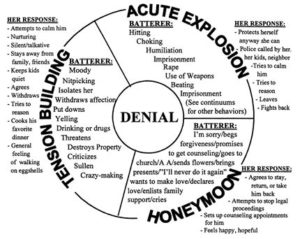
The wheel above is the wheel of domestic violence.  It starts with the honeymoon, this is where I was put on the pedestal, then the tension built, which leads to the explosion.  And it happens again and again.  It is called a wheel because it rolls.  The cycle of abuse continues, and repeats it’s self again and again.

According to North Korea domestic violence is prevalent and there is “very limited awareness” about the issue and a lack of legal services, psycho-social support and shelters available for victims, the panel said.  They also explain that the report found that penalties for rape in North Korea were not commensurate with the severity of the crime, which also often goes unpunished. Legal changes in 2012 lowered the penalties for some forms of rape, including the rape of children, rape by a work supervisor and repeated rape.  So in conclusion, if you are a victim of domestic violence you do have a better chance of being protected by the law if you are in the U.S court system.

References


World Health Organization- http://www.who.int/mediacentre/factsheets/fs239/en/

Haven- https://www.haven-oakland.org/about

National Coalition Against Domestic Violence-  https://ncadv.org/statistics

North Korea News-  https://in.reuters.com/article/northkorea-un-rights/north-korean-women-suffer-discrimination-rape-malnutrition-u-n-idINKBN1DK1EL


Got milk…?

Breastfeeding our babies is one of the most natural abilities our womanly bodies are able to do.  Our milk is designed exactly for our baby (or if you are really lucky-babies.)  Denying your baby the nutrients and fats that their little growing bodies need can contribute to health problems, later in life.  The ability to suck from a breast takes different facial muscles than the muscles it requires from a bottle.  Not to mention, have you ever heard of a woman recalling her breast milk?  I think it’s safe to say no.  If you had a label on your breast that announced all of the ingredients you would read that there are no chemicals, no fake additives, nothing machine made, no metal shards or paper… Just pure milk programed especially at the right temperature for your growing baby.

One great website that explains breastfeeding and how babies get milk out of the breast is explained here on this website.  Yes there are images of breastfeeding, yes I believe they are trying to sell bras designed for breastfeeding moms.  You can read more here… https://www.bravadodesigns.com/us/blogs/breastfeeding-info/121624711-breastfeeding-how-your-baby-gets-the-milk-out-of-your-breast


In other parts of the world it is completely natural to breastfeed.  Here in America, you are discharged from the hospital with formula.   The support a woman receives is very important to her ability to successfully breastfeed.  In America there is a lot going against breastfeeding.  The access to formula is easy, bottle feeding is the choice of Americans.  As you can see in the chart below babies are supplemented with formula.  But the chart above shows that breastfeeding is supported in many different ways in Norway.  In Norway, see the chart below that I created in comparison to Norway’s support ‘VS’ USA…

Norway

Women can breastfeed anywhere, busses, parks, cafes, stores.

Women get the support on breastfeeding they need before they leave the hospital.

Working women get 2 hours off a day to breastfeed.  It is not uncommon to breastfeed at your desk.

Norwegian mothers are expected to breastfeed.

USA

Women are supported to bottle feed and are given formula in the hospital.

Breastfeeding at work in not supported.  Pumping is, there are select companies that support pumping with rooms.  Most American women find other places to pump, most commonly the bathroom, but more recently their vehicles, because pumps are equipped with batteries that can be charged in vehicles.

Info from: http://www.nytimes.com/2003/10/21/world/norway-leads-industrial-nations-back-to-breast-feeding.html


Percentage of Breastfed Children Who Were Supplemented with Infant Formula, by Birth Year, National Immunization Survey, United Statesa,b,c

2. Percentage of Breastfed Children Who Were Supplemented with Infant Formula, by Birth Year, National Immunization Survey, United States - This chart displays the percentages of breastfed infants born from 2003 to 2014 who were supplemented with infant formula within the first 2 days, 3 or 6 months of age. From 2003 to 2014, rates for breastfed infants supplemented with infant formula within the first 2 days, 3 or 6 months decreased from 22.3% to 15.5%, from 38.1% to 27.8% or from 47.4% to 33.8%, respectively.

aFormula supplementation rates through 2008 births are based on the National Immunization Survey’s landline sampling frame. Starting with 2009 births, rates are based on a dual-frame sample that includes respondents surveyed on landline or cellular telephones. See survey methods for details on study design and the impact of adding a sample of cellular telephone respondents to the National Immunization Survey starting in 2011.

bFormula supplementation is defined as supplementation of breast milk with formula (with or without other supplementary liquids or solids) among infants breastfed at the age specified (2 days, 3 months, or 6 months). Data from the U.S. territories are excluded from the national estimates to be consistent with the analytical methods for the establishment of Healthy People 2020 targets on breastfeeding.

The chart above was found at this site…

 https://www.cdc.gov/breastfeeding/data/NIS_data/index.htm

~Once upon a birthday~

It was Tuesday morning, September 23rd 2008.  I had been having contractions since 4 am.  It was now 8:30 am and they were getting so bad, it was time to go to the hospital.  When I got there I was already dilated to a 6.  They took me back, hooked me up with an IV and I was placed in a bed.  The pain was getting out of hand by about 9:30.  The anesthesiologist came in and did his thing.  But the pain never left.

Finally after hard laboring for a while, it was about 2:30 pm and I was ready to push.  My mother on one leg and the nurse on the other.  I looked into the mirror at the end of the bed and that was my motivation to push.  I saw just the tiniest little spot of a hairy head and as I sunk my teeth into the railing of the bed, there I laid there being watched by about 15 student doctors.  The pain was so bad I began swearing and yelling telling the poor students that if they couldn’t do anything to help me, they needed to get out of the room.  The ripping of my body was so painful, I began scared to push him out.  My mother begged for me to have an episiotomy but the nurse claimed it was too late.  I was stretching just as I should be.  Thinking back now I wish I would have kicked her in the face.  Finally at 2:43 and after only about 8 pushed I pushed him out.   I don’t remember much after that but my mother tells me that it took the doctor about 45 minutes to stitch me back up.  No pain relief.  I was not ready for the pain.

Considering this was my 2nd birth, the first one I labored for 19 hours and pushed 4 times.   I am pretty sure that the next time I have a baby I want to do it in Denmark.  As I read about the birth there, it is a much more natural experience.  They look at hospitalization as a last resort.  You do have a doctor but really the midwife does the delivering and they have hot towels, offer massages, changing positions, and even acupuncture to alleviate the pain.  Sounds like a dream birthing experience considering the trauma I experienced.  Also after the birth you can choose to go to the maternity ward, or a birth hotel.  Sounds like a vacation.  They also support breast feeding 100%.   My boys never tasted formula.  23 and 17 months they nursed, neither ever taking a bottle, once.

The effect I believe the birthing experience has on has a lot to do with the experience the mother has during birth.  There are many factors that relate to the mothers health.  I personally never experienced postpartum depression.  But have heard stories how it turned moms into sad women unable to care for their children.   Personally in my relationship my husband at the time thought I had postpartum depression, I went to a group for women that also had it.  The leader of the group diagnosed me with having an @$$%*!# for a husband and sent me home.  PTSD, stress , exhaustion, and sleep deprivation are also among the top symptoms of after childbirth.   Luckily I haven’t experienced any of those but in comparison I do believe that Denmark is very supportive of the natural childbirth and use doctors and hospitals as emergency basis only.

About This Teacher

Hello and welcome!  This blog belongs to a mom, teacher, and a student.  When I was in my 20’s I had no clue how to get to where I wanted to be in life.  Having gone through a devastating divorce that included domestic violence so bad it forced me to become homeless with my sons.  I have reinvented myself into who I am today.  My boys are now 9 and 11.  They have gave me what I was missing.  With the skill I gained in becoming their mother, I found my motivation to pursue my dream, teaching.  They were there that day, cheering me on as I walked across the stage and received my Associates degree and a year later, my Bachelor degree in Early Childhood.  Now I teach preschool for the Great Start Readiness Program in Michigan.  I just remarried this summer in Key West FL, to a man that loves me and the boys and is our biggest supporter.  We live in Michigan where we enjoy hiking, biking, yoga, traveling and laughing.

Please follow & like us :)

RSS
Facebook
Twitter
Pinterest